

Africa’s Economic Giants: Top 2 Economies by Region
Africa isn’t one market — it’s five. From the Mediterranean coast to the Cape, from the Atlantic cocoa belt to the Great Lakes, the continent’s five regions each run on a different engine, led by their own heavyweight economies. Here’s a region-by-region look at who’s driving growth, and why it matters.
The Big Picture
Combined, Africa’s five regions represent well over $2.6 trillion in nominal GDP. North Africa currently holds the largest share ($926B) thanks to hydrocarbon wealth, Suez transit revenue, and a construction boom — followed by Southern Africa ($649B), West Africa ($544B), East Africa ($292B), and Central Africa ($214B).
Intra-African trade sits at roughly 15% today, with a continental target of 50% — a shift the World Bank estimates could add over $450 billion to regional GDP by 2035.

North Africa — Mediterranean Gateway & Energy Treasury
Leaders: Egypt and Algeria
North Africa commands the continent’s largest combined output ($926B), anchored by hydrocarbon wealth, Suez transit revenues, and a construction supercycle. Egypt ($383B, +3.8% forecast for 2025) leads on energy & gas, the Suez Canal, and tourism, with the New Administrative Capital’s $58B build-out, LNG exports, and resilient remittance inflows as key growth drivers. Algeria ($266B, +4.1% forecast for 2025) follows on hydrocarbons, mining, fertilizers, and agriculture, with the EU’s post-2022 gas pivot, the Hassi Messaoud field upgrade, and a diversification fund driving growth.
Why it matters: North Africa’s peg to Europe via gas, fertilizers, and near-shoring factories positions it as the continent’s hedge against global market volatility.

Southern Africa — Mineral Wealth & Industrial Core
Leaders: South Africa and Angola
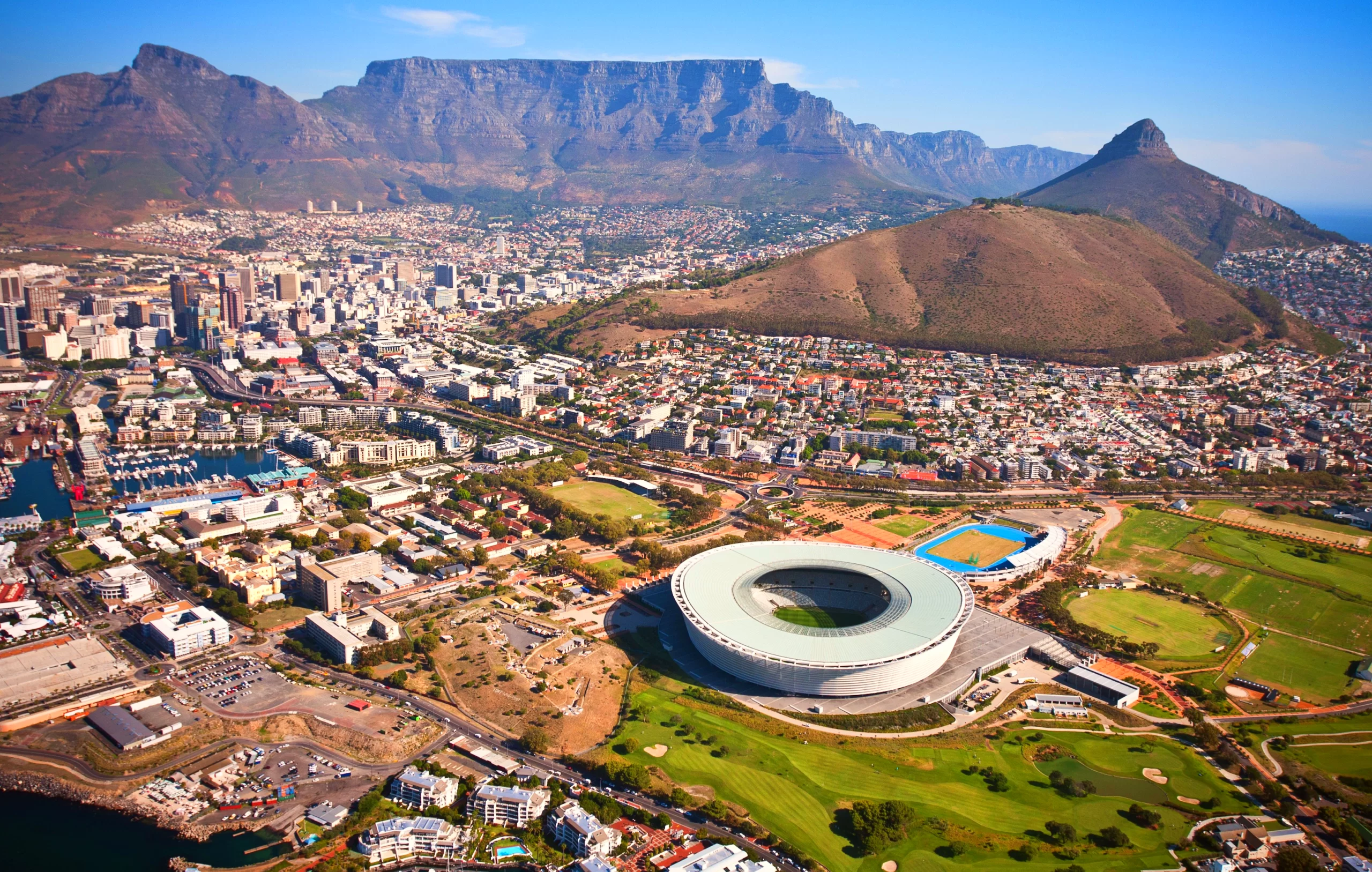
Southern Africa’s combined output ($649B) balances South Africa’s diversified industrial base with Angola’s oil rebound and a mining belt that powers EV batteries globally. South Africa ($410B, +1.1% forecast for 2025) runs on mining, finance, automotive, and renewables, driven by platinum, manganese, and chrome demand tied to the energy transition, alongside private power reform. Angola ($92B, +3.2% forecast for 2025) runs on crude oil, diamonds, LNG, and logistics, boosted by a deepwater oil restart and the Lobito Corridor rail link to the DRC copper belt.
Why it matters: Southern Africa holds roughly 75% of the world’s platinum and 50% of manganese — irreplaceable inputs for hydrogen and batteries. Power reform is what unlocks the region’s growth.
West Africa — Fintech Surge & Agrarian Powerhouse
Leaders: Nigeria and Côte d’Ivoire
West Africa’s combined output ($544B) is led by Nigeria’s volume despite currency reforms, while Côte d’Ivoire’s stability and cocoa dominance keep it narrowly ahead of Ghana ($75B) in nominal terms. Nigeria ($252B, +2.9% forecast for 2025) runs on oil & gas, fintech, Nollywood, and agriculture, with FX unification, the Dangote Refinery’s 650,000 barrel-per-day capacity, and a booming payments/unicorn scene. Côte d’Ivoire ($86B, +6.5% forecast for 2025) runs on cocoa, cashew, gold, and port logistics, with the world’s #1 cocoa producer status (40% global share), Abidjan port expansion, and a rising middle class.
Why it matters: West Africa’s 450 million people drive a mobile money volume larger than any other region outside Asia. Port capacity plus fintech is what’s driving trade velocity here.
East Africa — Tech Hub & Green Energy Frontier
Leaders: Kenya and Ethiopia
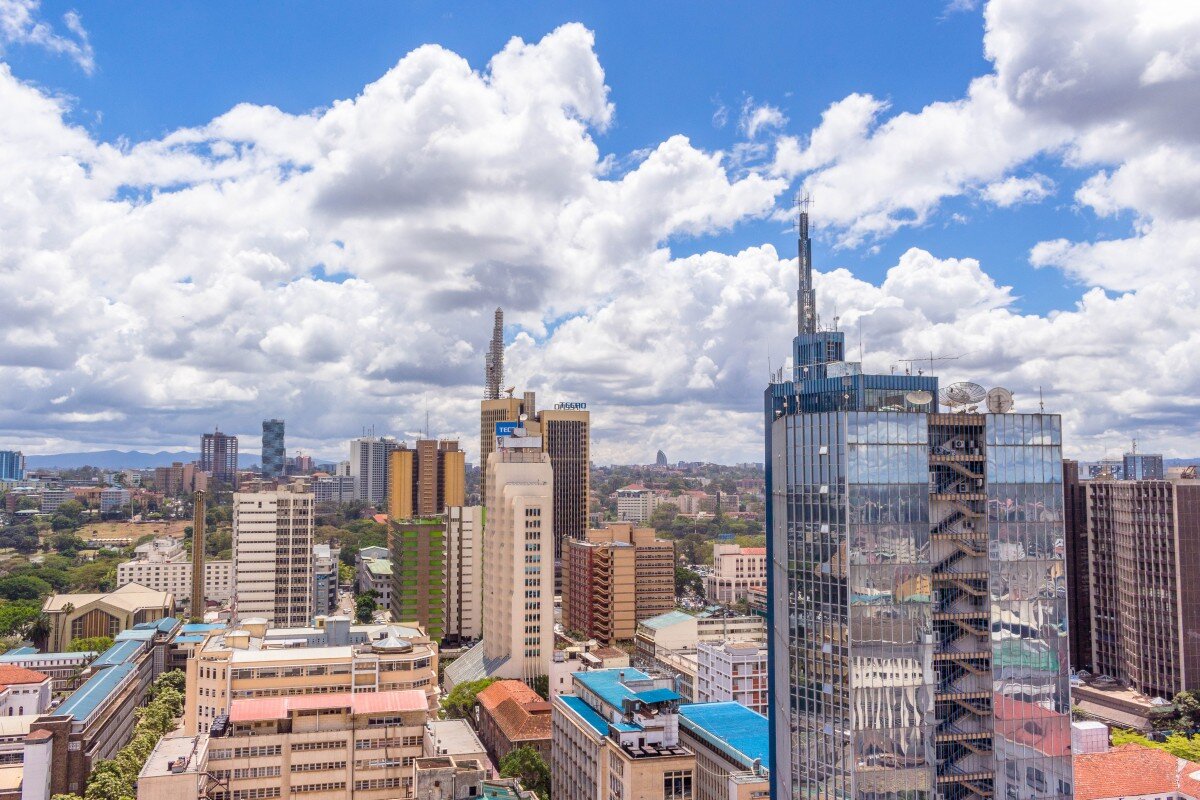
East Africa ($292B) is the fastest-growing region, led by Kenya’s Silicon Savannah and Ethiopia’s hydropower belt. Kenya ($147B, +5.5% forecast for 2025) runs on tech & M-Pesa, geothermal energy, horticulture, and tourism, supported by Africa’s greenest grid (90% renewable), a wave of Nairobi tech IPOs, and its role as a logistics hub. Ethiopia ($121B, +6.2% forecast for 2025) runs on aviation, hydropower, textiles, and coffee, anchored by the 5.15GW GERD dam, Ethiopian Airlines’ cargo hub role, and new industrial parks.
Why it matters: East Africa grows fastest on green energy and services. Kenya’s M-Pesa moves 60% of GDP digitally, while Ethiopia’s air hub links 60 African cities.
Central Africa — Congo Basin & Critical Minerals
Leaders: DR Congo and Cameroon
Smallest by current GDP ($214B), but home to 70% of the world’s cobalt and vast rainforest carbon credit potential — the next commodity supercycle in waiting. DR Congo ($79B, +4.8% forecast for 2025) runs on cobalt, copper, and hydropower, with EV-driven cobalt/copper demand, Inga Dam potential, and the Lobito Corridor as core growth drivers. Cameroon ($53B, +3.9% forecast for 2025) runs on oil, cocoa, timber, and port trade, driven by the Kribi deep-sea port, the Chad-Cameroon pipeline, and new agro-processing zones.
Why it matters: Central Africa is tiny by GDP today but holds outsized future leverage — 70% of global cobalt, and one of the planet’s largest carbon sinks. Carbon credits plus mineral corridors are the upside.

Two-Speed Continent, One Integrated Future
North and Southern Africa dominate nominal output, while East and West Africa lead on demographics and growth rate. Central Africa remains a resource base for future value-add. As power reform, port capacity, and corridor infrastructure — like Egypt’s new capital, the Lobito Corridor, and Nairobi’s tech push — come online, the region-to-region trade story, not just the region-to-world one, is what will define Africa’s next decade of growth.
FAQs
Which African region has the largest economy?
North Africa currently leads with a combined nominal GDP of $926B, driven mainly by Egypt and Algeria’s hydrocarbon and transit revenues.
Which country has Africa’s largest single economy?
South Africa ($410B) and Egypt ($383B) are the two largest single economies on the continent by nominal GDP.
Which region is growing fastest?
East Africa currently posts the fastest regional growth, led by Kenya’s tech sector (+5.5% forecast) and Ethiopia’s hydropower-driven industrialization (+6.2% forecast).
Why does Central Africa matter despite its smaller GDP?
Central Africa holds roughly 70% of the world’s cobalt reserves and major rainforest carbon-credit potential, making it critical for future battery and green-energy supply chains.
What’s driving West Africa’s fintech boom?
Nigeria’s mobile money and digital payments ecosystem, combined with Côte d’Ivoire’s cocoa-driven trade income, has made West Africa’s mobile money volume larger than any other region outside Asia.
